











Sam, 41, was diagnosed with Klinefelter syndrome at 25, when he and his then partner struggled to start a family. Understanding the genetic condition that affects one in 500 men helped Sam make sense of a lifetime of feeling different — but it also marked the beginning of over a decade of infertility treatments, failed adoption attempts, and hard decisions. Now, with the English Channel in his sights, the Brighton-based senior life raft technician is swimming to raise awareness for a condition most people have never heard of. Here, he shares what it’s really like to live with Klinefelter syndrome.
Klinefelter syndrome is a genetic condition where you’re born with an extra X chromosome (usually 47,XXY) instead of the typical XY. I was diagnosed with Klinefelter syndrome when I was 25. At the time, my then-wife and I were trying for kids — I’ve been told that’s when most men are diagnosed, because infertility is a sign of the condition.
I hadn’t heard of Klinefelter syndrome before. I was a bit taken back by it at first, but at the same time I always thought I was different. Behaved differently, thought differently, looked different, compared to most other boys my age.
The diagnosis answered my questions about why I found things harder to understand than most. I struggled all the way through school. I thought it was for other reasons. Part of my version of Klinefelter syndrome — and it’s different for everyone — is that when I learn something, I do absorb it and take it on board, but it doesn’t actually make sense until maybe a few days later or a week later. Knowing how I operate means I can put the necessary tools in place to get things done.
It also explained my body type — flat feet, long limbs, short torso, fattier deposits around the breast area, always gaining weight around the stomach, not in areas where I’d expect it.
Processing the diagnosis
At first it was a shock. But I think I processed it on my own. Eventually I accepted it — I felt I had to, because it wasn’t going to change and there was nothing I could do to change it.
I jumped onto Facebook and found a few groups — my wife at the time found some too — with men who had been diagnosed. There were a few people in other countries I spoke to. A lot of my learning has come through those groups: what other men are experiencing with the condition, and just not feeling like it’s only you that feels that way.
One of the best pieces of advice I got was from one of the guys in the group: everything you read online about our condition is negative. There’s not an ounce of positivity about it online. So don’t listen to it.
Treatment has made an enormous difference. I always wanted to grow a beard — I’ve only been able to grow one in the last three years. The way I think and feel is different too.
Trying to have children
Because I wanted to have children of my own rather than use other people’s sperm, I was given the option of having a testicular biopsy, which I took. From that, they were able to get three healthy sperm, and then we started progressing through IVF.
After the three rounds of IVF with my sperm, we moved on. I wanted to keep it in the family, so I got my brother to donate his sperm. We did that a few times before we had a break and decided to try adoption. Adoption didn’t work out. Then we were offered embryo adoption and adopted a few embryos when it was our turn. We used one of them. One died. And then the last one was the one we were um-ing and ah-ing about before our relationship ended.
We were always working towards children. There was never really a moment where we stopped and had a break. Constantly working towards something that I couldn’t do, it was a kick in the guts. I don’t know how I found the strength every time to just go through it again and do it again.
I probably should have sought help, but I processed my infertility on my own. Today I still have trouble wanting to be around children. I don’t know if that’s because of the long course we took and never really stopping to reassess during any of those IVF cycles.

Raising awareness about the condition
I tell everyone about Klinefelter syndrome. I make an effort to work it into any conversation if I haven’t told that person about it, just to educate people. I’ve also got it tattooed on my forearm. When I was working in retail, it was a nice conversation piece — people would always ask me what it means.
The condition is really never spoken about. We get mentioned as intersex, but that’s about it. The more important thing is early detection — we need a better method of detecting it earlier.
I’m sure there are men out there who have lived their whole lives with Klinefelter syndrome and never known. If I was 50 and found out, I’d feel like I’d been robbed of half my life, of my full potential.
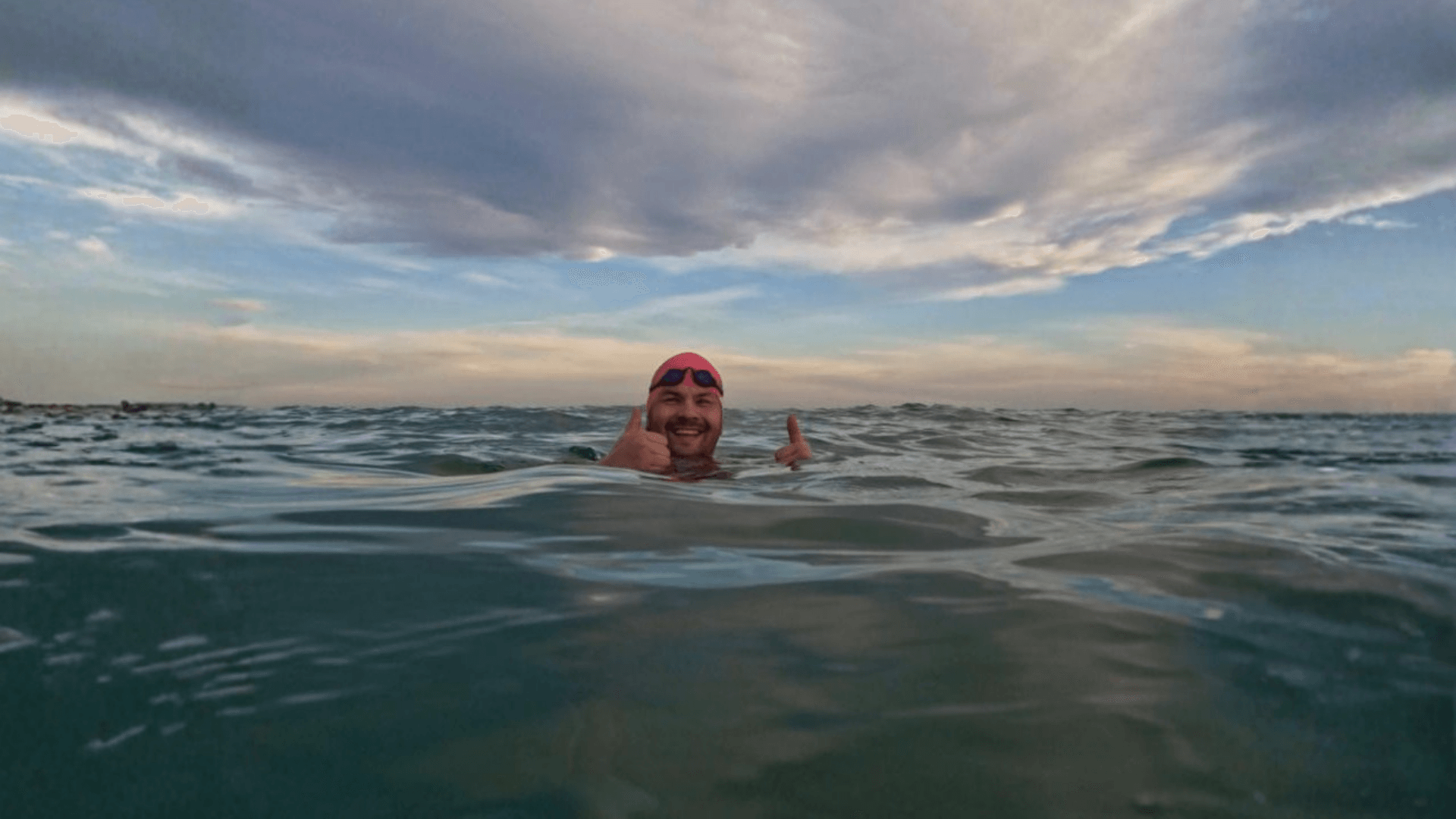
I’m planning to swim the English Channel in 2027 to raise awareness for Klinefelter syndrome — The Extra X Challenge. I swam all through high school and then went back to it when I was 28, when I found my way back into a masters squad in Frankston. Then I started swimming with a group called The Pink Caps, where I met quite a few older blokes who were swimmers from a few different states.
A couple of years ago we were doing the Rottnest Swim and got pulled out halfway through because of bad weather. That was pretty deflating. When I got back to Melbourne I was looking for what swim I could do next. The English Channel Cold Water Qualifier was coming up, and I thought I was pretty equipped with cold water after six years of it. I just thought, why not have a go. I ended up being the second longest swimmer on the day. Went for seven hours at 15.5 degrees. I came out of it feeling pretty good — tired, but like all that training for Rottnest wasn’t wasted. I got to test myself and prove I could swim that sort of distance. Then later that year we swam Great Keppel Island, which was 20K.
For me, this swim isn’t just about reaching the French coast. If one young person receives an earlier diagnosis, one family finds answers sooner, or one new research project is made possible because of this campaign, then every stroke across the English Channel will have been worthwhile.
Advice for others
In the last maybe five years, I’ve learned that if I want to see change or something good in myself, I have to force it. I have to set up things in place that make me force myself to change. A routine for me before I go to bed is that I’ve got everything prepared so I can literally just put on my clothes and walk out the door.
One ritual of mine is that I self-reflect every day — on all my interactions with everyone. I always look at where I could have done better, or been better, or maybe where I shouldn’t have said something or could have worded it differently. I’ve learned that sometimes I don’t always articulate myself well. I’ve been told I can come across as blunt and rude at times, but I’m not aware of it. So I’ve asked the people around me to highlight it to me when it happens so I can fix it.
Swimming is the other thing. It keeps me physically and mentally on top of things. Any time I can be in the ocean, I will be.
My advice for anyone who’s just been diagnosed is to be kind and true to yourself, do your own research about the condition to better understand how you operate as an individual. Embrace the extra X and don’t let it define you.
Klinefelter syndrome has shaped who I am. It hasn’t always been easy, but today I wouldn’t change having that extra X. It’s part of me, and if sharing my story helps someone else find answers earlier than I did, then it’s worth it.
You can support Sam’s Extra X Challenge to swim the English Channel here.