











Medically reviewed by
Prof Ben Tran, Medical Oncologist, Peter MacCallum Cancer Centre
What is testicular cancer?
Testicular cancer is caused by the abnormal development of cells in the testes (also known as testicles), resulting in the formation of testicular germ cell tumours (TGCTs). Other types of testicular tumours are benign (not cancerous).
Testicular cancer occurs in 1 in 13,333 Australian men. Around 1000 Australian men are diagnosed with testicular cancer each year and almost 90% of them are aged under 50 years.
Although testicular cancer accounts for less than 1% of cancers in men, it’s the most common type of tumour in men aged in their 20s and 30s.
Symptoms of testicular cancer
The most common symptom of testicular cancer is a lump that can be felt on one testis (testicle), or enlargement or hardening of one testis. Testicular cancer usually doesn't occur on both sides. The lump, enlargement or hardening may or may not be painful.
Some men with testicular cancer that has spread to other parts of the body might not seek help until they have severe symptoms, like back pain, weight loss, or breathlessness.
Scrotum and testicular anatomy
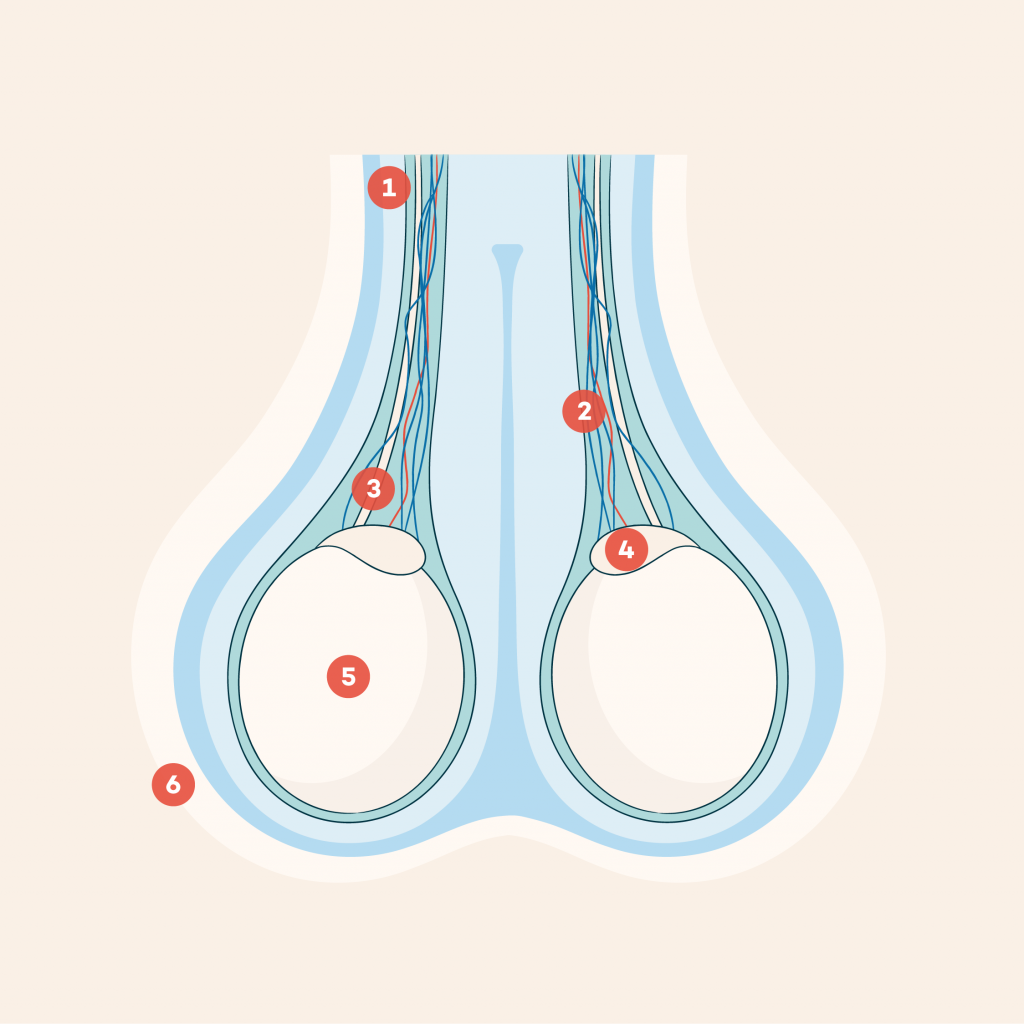

Anatomy key
- Spermatic cord
- Testicular arteries and veins
- Vas deferens
- Epididymis
- Testis
- Scrotum
Causes of testicular cancer
Many characteristics of Testicular cancer seems to begin in early life, from genetic changes in the stem cells that usually go on to form sperm.
Testicular cancer is more common in boys and men with abnormalities in genital development, including cryptorchidism (undescended testes) than in those without.
Subscribe to our newsletter

Diagnosis of testicular cancer
Testicular cancer is diagnosed through an ultrasound to examine a testicular lump, and blood tests to measure tumour markers that indicate the presence of cancer.
MRI or CT scans are used to look for the spread of cancer to other parts of the body.
Treatment of testicular cancer
If you have testicular cancer, you’ll usually have surgery to remove the affected testis (orchidectomy). This cures most men with tumours that have not spread to other parts of the body. You can have a prosthetic testis inserted so the appearance of your genitals is not affected.
If your testicular cancer has spread to nearby lymph nodes or other parts of the body, your treatment will usually include radiotherapy or chemotherapy as well as surgery to remove the tumour. Collection of tissue samples (biopsies) might be needed to confirm if the cancer has spread.
Health effects of testicular cancer
Almost all men with testicular cancer that hasn’t spread are cured by orchidectomy, although some need chemotherapy or radiotherapy as well, depending on the tumour type.
Most men with testicular cancer that has spread to other parts of the body are cured by one type of chemotherapy, but some may need additional treatment, such as surgery or further chemotherapy.
98% of all men diagnosed with testicular cancer survive for at least another five years.
Chemotherapy and radiotherapy can affect your fertility, so you might need to think about taking steps to preserve your fertility, such as sperm banking, before your treatment begins.