












Males have a clear role in reproduction, but that’s not usually matched by their level of responsibility. When it comes to contraception, there are fewer options for males than females but research into new contraceptives for men is ongoing.
What is contraception?
Contraception is using something to prevent pregnancy. Things that are used to prevent pregnancy are called contraceptives. Contraceptives can be medications taken as pills or injections, objects like condoms or intrauterine devices, or behaviours like the fertility awareness or withdrawal methods.
Types of contraceptives
Some contraceptives are more effective than others for preventing pregnancy or sexually transmissible infections (STIs), some are easier to use, and some last for different amounts of time. That means some contraceptives suit some people better than others.
Like most aspects of reproductive health, we tend to think of contraceptives from a female point of view. This makes sense, since it’s the female partner who gets pregnant, but it’s also unfair. It means that females can end up bearing most responsibility for a couple’s contraceptive use, even though it’s a shared responsibility.
The focus on females has resulted in multiple contraceptive options that target female biology. Many of these have unwanted side-effects that must be balanced against the benefits of these methods. There’s an implicit expectation that females will tolerate unwanted side-effects of contraceptives to protect against unwanted pregnancy.
The shared responsibility of contraception means that men should understand all contraceptive options so that they can decide, with their partner(s), which is the best option for them both.
What are male contraceptives?
Contraceptive choices for males are limited to:
Condoms
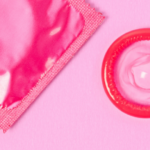
Condoms are a barrier method of contraception. They're worn during sex to stop semen from passing between partners. External (sometimes called male) condoms are a thin sheath, usually latex, worn over the erect penis. Used properly, condoms are around 98% effective at preventing pregnancy but in real-world situations they’re around 87% effective over a period of 12 months (this means that there are 13 pregnancies for every 100 couples who use condoms for a year; that’s a 13% failure rate).
The withdrawal method
The withdrawal method, also called coitus interruptus or "pulling out", is when the penis is removed from the vagina before ejaculation, so semen is released away from the vulva. The withdrawal method is less effective than condoms, with a one-year failure rate of 4% if used perfectly and 20% with typical use (the withdrawal method does not protect against STIs).
Vasectomy
A vasectomy is a minor surgical procedure that cuts or blocks the vas deferens, the tubes that carry sperm from the testes to mix with semen before ejaculation.
Vasectomy can be performed under local anaesthetic in about 15 to 30 minutes, usually in a clinic, urology rooms or day surgery, in hospital under general anaesthesia.
Vasectomy has one of the lowest failure rates of all forms of contraception, at 0.1%, but that is only after success of the procedure has been confirmed. Vasectomy should also be considered as permanent, not reversible, so if you might want to have children one day it’s not a realistic contraceptive option (and it doesn’t protect against STIs).
What are female contraceptives?
Contraceptive choices for females include hormonal or non-hormonal options, and can be divided into long- or short-acting methods.
Contraceptive pills
Contraceptive pills are hormonal medications taken daily to prevent pregnancy.
There are two main types:
Contraceptive pills are around 99% effective with perfect use, but closer to 91 to 93% with typical use. These contraceptives can cause irregular bleeding, headaches, breast tenderness, acne and changes in mood. The oestrogen in some the combined pill increases the risk of blood clots.
Subscribe to our newsletter

Contraceptive injections
Contraceptive injections are a long-acting hormonal method given as an injection every few months. They have similar side effects to contraceptive pills, plus weight gain in some users.
Long-acting reversible contraceptives (LARCs)
Long-acting reversible contraceptives are methods that work for years at a time, don't depend on remembering anything day-to-day, and can be removed when someone wants to stop using them. They include:
LARCs are highly effective (failure rate less than 1%) but require a health practitioner to insert and remove them. IUDs can cause cramps and changes in bleeding. The hormones in implants and some IUDs cause the same side-effects as contraceptive pills.
Diaphragms and female condoms
A diaphragm is a barrier method of contraception. It's a shallow, dome-shaped cup, usually silicone, inserted into the vagina before sex so it covers the cervix and blocks sperm from entering the uterus. Female (or ‘internal’) condoms are a soft pouch inserted into the vagina before sex.
Both work in a similar way to male condoms, but they are not quite as effective.
The fertility awareness method
Fertility awareness methods, sometimes called natural family planning or the rhythm method, involve tracking signs of the menstrual cycle to identify the fertile window, then avoiding sex or using a barrier method during that time. The fertility awareness method is about as effective as the withdrawal method, it does not protect against STIs, and another contraceptive method must be used when fertility is likely.
Tubal ligation
Tubal ligation is a surgical procedure to cut and tie-off the fallopian tubes, which prevents ova (eggs) moving from the ovaries to the uterus and prevents sperm from accessing the ova. It is a permanent non-hormonal contraceptive, similar to vasectomy. The surgery for tubal ligation is more complicated (and therefore more risky and painful, with longer recovery) than surgery for vasectomy.
Future male contraceptives
Despite starting research on long-acting, reversible birth control for men in the 1970s, promising results from clinical trials, and public interest, we’re yet to see a product hit the market. However, there are lots of different male contraceptives in development.
Male hormonal contraceptives
Male hormonal contraceptives use the ability of testosterone to shut down sperm production. A couple of studies performed by the World Health Organisation used weekly testosterone injections, which were effective for a majority of men but did not reduce sperm counts low enough in about 10%. The goal for male hormonal contraceptives is to reduce sperm counts to less than one million sperm per ml of ejaculate (normal sperm counts are between 15-150 million/ml). This should decrease the chance of conception to less than 1% per year, which is the same as that achieved by female hormonal contraceptives.
Weekly injections were unpopular, and there were some unwanted effects on blood cholesterol, which led to abandonment of this method.
Combined treatment with testosterone and progesterone-like drugs continues to be investigated as a possible male contraceptive. Testosterone combined with an injection of long-acting progesterone (the same as that used in female contraceptive injections) did not reduce sperm counts in enough men.
Other testosterone/progestin combinations have been tried, and some are able to get sperm counts down low enough in more than 90% of men, but concerns about side effects (including mood disturbance and suicide risk) have prevented further development.
Gels containing testosterone and synthetic progesterone or a synthetic hormone with testosterone- and progesterone-like action present the most realistic prospect of development. Recent studies have been completed using this approach but results have not yet been released.
Male non-hormonal contraceptives
Non-hormonal ways to reversibly block sperm production, movement or transport, or prevent fertilisation by affecting sperm function are all under investigation.
Possibilities include:
Many different approaches to male contraception have been tried. Hopefully soon we will have something that’s effective and safe that will allow men to take more responsibility for reproduction.